

As casino players, it’s easy to think casinos simply exist to reward us with cash for our gambling efforts. On the contrary, these institutions are businesses designed to rake in profit.
That leads to the question: how do casinos make money? Well, there’s a simple term called house edge that’s crucial to keeping gambling outfits profitable no matter how often players win.
Below, I explain the house edge and how it can affect your gameplay as a player:
What Exactly is House Edge?
House edge is basically the casino’s advantage over players across different casino games. A more straightforward way to explain it would be the average profit gambling establishments can expect from wagers.
You’ll usually see it displayed as a percentage between 2-5%, depending on the game. In a scenario where the house edge is 2%, the casino will potentially keep $2 for every $100 bet. Gamblers will walk away with the other 98% (or $98).
But this doesn’t apply for every individual stake. Instead, it’s an average calculated across thousands of bets from players.
House edge is the element behind the concept that the casino always wins. That’s because, no matter how often you win during a gambling session, the house edge will eventually make up for the casino’s losses and reward it with profits if you play long enough.
House Edge Across Different Casino Games
The house edge differs for different games, with some having higher percentages than others. Blackjack, for instance, has the lowest house edge you’ll find at casinos, with the percentage being as low as 0.5%. However, this value depends on whether you’re playing with perfect blackjack strategy.
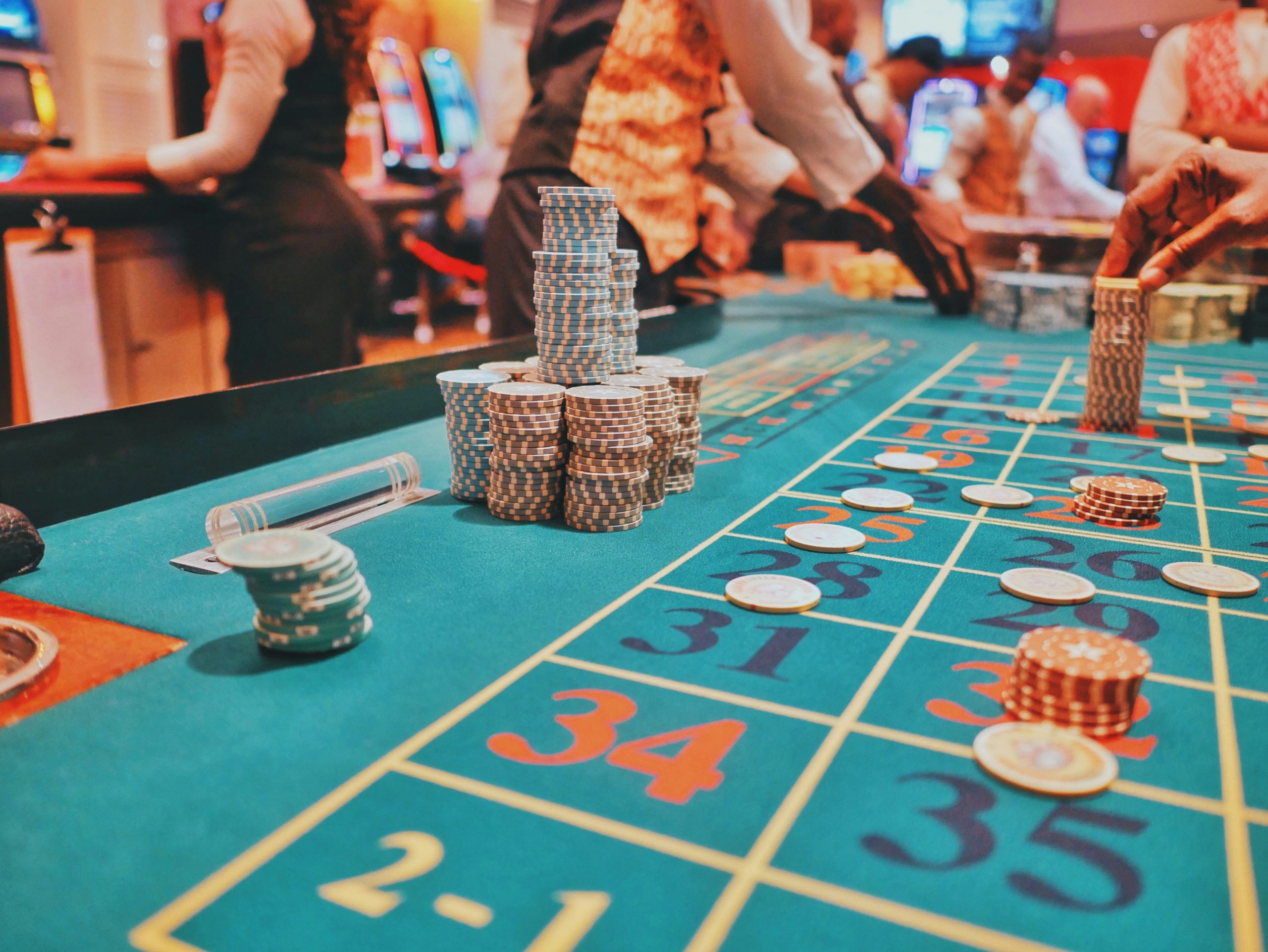
Baccarat also has a low house edge that’s slightly above 1%. The house edge for roulette depends on the version, with the American variant having a casino advantage as high as 5.26% while the percentage for European Roulette is lower at 2.7%.
Ideally, you want to play casino games with a lower house edge because they have better odds for players.
At this point, you’re probably wondering how to figure out the house edge for casino games. Well, it starts by finding out the odds of winning and losing. Let’s use European Roulette, for instance.
If you bet on a number on the wheel, the odds of a win are 1/37, since there are 37 values in the game. In decimal form, that would be 0.027. Multiply that value by 100 to convert it to a percentage, and it becomes 2.7%, which is the house edge for the game.
What About the House Edge for Slot Machines?
We’ve only discussed house edge with table games in this blog post. So, you’re probably wondering if all this doesn’t apply to slot machines. It does actually. For online slots, the RTP can give an indicator of the house edge.
A slot machine with a 96% RTP has a 4% house edge. In other words, since RTP is the average amount players can recoup from a casino slot in the long run, the house edge is simply the other side of that value.
Closing Thoughts: How House Edge Affects Your Gameplay as a Gambler
The house edge can offer an idea of how favourable the odds are to players. Casino games with a lower edge typically offer better odds on the player side, so you should focus on those.
Also, your playing strategies in games like blackjack can significantly reduce the casino’s advantage. Therefore, refining your tactics can put you in a better position to claim wins.
Lastly, remember to play with a budget. The longer you wager, the more likely it is for the house edge to catch up with you.


